
What Is GxP Compliance for Pharma & Medical Devices?
GxP is a catch-all term for “good practice rules” that ensure life science products, drugs, medicines, and food are all handled safely and with high quality. This guide breaks down what GxP requires, how its disciplines map to your operations, and where QMS software fits into compliance.
What Is GxP Compliance?
GxP stands for “Good x Practice;” the ex acts as a placeholder for a specific discipline: GMP (manufacturing), GDP (distribution), GLP (laboratory), and more.
The term is an umbrella for a framework of quality guidelines and regulations that govern how products are developed, manufactured, tested, stored, and distributed. These are all enforced by one or more regulatory authorities, depending on the activity and the geography.
The GxP Disciplines
Each discipline within the GxP framework covers a specific product lifecycle phase and a set of regulatory requirements. The most relevant for pharmaceutical and medical device companies operating in the US market are:
| Discipline | Abbreviation | Key Regulation | Scope |
|---|---|---|---|
| Good Manufacturing Practice | GMP | 21 CFR Parts 210/211 (pharma); 21 CFR Part 820 (devices) | Production controls, batch records, quality systems |
| Good Laboratory Practice | GLP | 21 CFR Part 58 | Non-clinical safety studies submitted to FDA |
| Good Clinical Practice | GCP | ICH E6(R2); 21 CFR Part 312 | Clinical trial conduct and human subject protection |
| Good Distribution Practice | GDP | 21 CFR Parts 205, 211 | Storage, handling, and distribution of drug products |
| Good Pharmacovigilance Practice | GVP | 21 CFR 314.80; ICH E2A–E2F | Post-market safety monitoring and adverse event reporting |
| Good Documentation Practice | GDocP | Across all GxP | Record-keeping standards underlying every other discipline |
Most companies are subject to more than one GxP discipline at the same time. For example, a pharmaceutical manufacturer running clinical trials operates under both GMP and GCP.
GxP compliance means having documented evidence that every regulated activity was performed correctly:
- By a qualified person
- Using a validated process
- And that the records prove it.
Key GxP Requirements
GxP compliance involves interrelated requirements with predictable failure modes that regulators know to look for:
1 Documentation and Good Documentation Practice (GDocP)
Without records, there is no evidence of compliance. GDocP sets the standards that apply to all regulated records regardless of discipline.
Records must be ALCOA+: Attributable, Legible, Contemporaneous, Original, Accurate, Complete, Consistent, Enduring, and Available.
In practice, this means:
- Recording actions in real time
- Tracking who, when, and why for all changes
- Correcting entries with strike-through, initials, date, and reason
- For electronic records, applying 21 CFR Part 11 for audit trails, digital signatures, and access controls
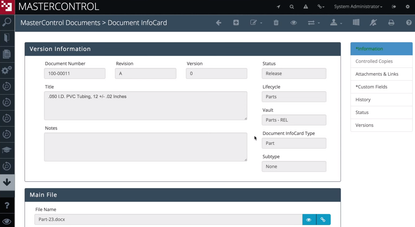
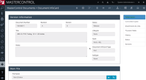
QMS software: MasterControl automatically routes SOPs, batch records, and quality documents for review and approval, with every version, signature, and change captured in the system’s audit trail.


2 CAPA (Corrective and Preventive Action)
When a deviation, nonconformance, complaint, or audit finding occurs, GxP requires:
- Prompt documentation and investigation of deviations and nonconformances
- Thorough and defensible root cause analysis
- Corrective actions are verified as effective before the CAPA is closed
- CAPAs are not repeated for the same root cause (this can create a significant inspection finding)
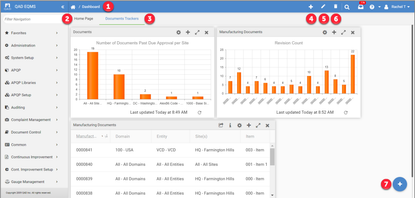
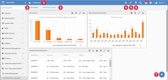
QMS software: QAD EQMS links CAPA records directly to production data. It ties deviations to the batch, equipment, personnel, and process conditions at the time to strengthen root cause analysis.

3 Change Control
In a GxP environment, any update made to a validated process, piece of equipment, raw material, facility, or software system must undergo a formal change control process before implementation.
Key requirements:
- Document and assess regulatory impact before approval
- Re-validate affected systems per FDA’s 2025 CSA guidance
- Confirm post-implementation outcomes without adverse effects
- Retain change records within the quality system
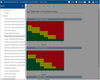
QMS software: Purpose-built QMS platforms route changes through approval workflows and link them to affected SOPs and validation records. They also require an electronic sign-off before anything moves forward.
4 Training and Personnel Qualification
Every GxP discipline requires that personnel are qualified for their role and trained on the current version of procedures. This means:
- Training employees on current SOPs before they perform any regulated activities
- Retraining personnel when SOPs are revised and documenting that training before the new version takes effect
- Training records capture what was trained, when, by whom, and to what degree of competency
- Maintaining current qualification records for specialized roles
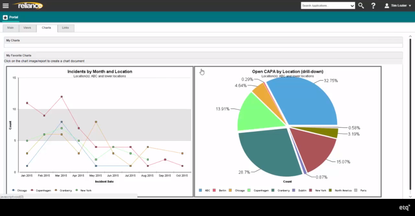
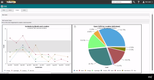
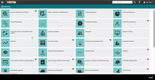
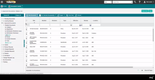
QMS software: Octave Reliance auto-assigns retraining tasks when an SOP is revised. Every employee’s training status against the current document set is tracked and reportable on demand.
5 Data Integrity
This is GxP’s most heavily enforced operational requirement in recent years, and it sits beneath every other discipline. Failures that frequently surface in FDA warning letters include:
- Backdating/predating records to reflect activities that happened at a different time
- Deleting or overwriting raw data without retaining the original
- Discarding failed test results before reporting
- Using shared logins that prevent user attribution
- Maintaining unofficial “pre-data” before entry into the system
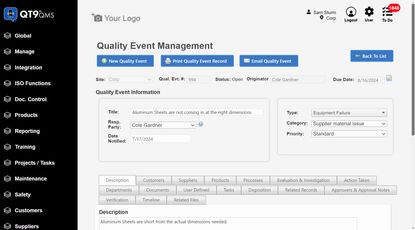
QMS software: QT9 QMS enforces automatic audit trails on each record. It timestamps every entry, change, and deletion and ties it to a specific user for a tamper-resistant data chain.
6 Computer System Validation (CSV / CSA)
Any computerized system used to create, modify, maintain, or transmit GxP records must be validated to ensure consistent, reliable performance.
The FDA’s 2025 CSA guidance replaced prescriptive CSV with a risk-based approach; validation effort now scales with impact on product quality and data integrity.
An updated February 2026 version broadened the scope to meet QMSR and ISO 13485, explicitly covering AI/ML tools, software bots, SaaS platforms, and cloud systems.
Key requirements:
- Validate the system is performing as intended prior to regulated use
- Re-validate anytime software is updated, reconfigured, or business use changes
- Retain validation documentation throughout the life of the system
- Run risk assessments to define validation depth
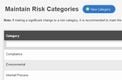
QMS software: QT9 QMS includes pre-executed IQ/OQ/PQ documentation. Re-validation documentation is provided with every software update.



Who Does GxP Apply To?
GxP applies to any organization that develops, manufactures, tests, stores, or distributes products regulated by the FDA or equivalent international authorities. That includes:
- Pharmaceutical manufacturers (21 CFR Parts 210/211)
- Medical device manufacturers (21 CFR Part 820 / QMSR)
- Biologics and biosimilar manufacturers
- Contract development and manufacturing organizations (CDMOs)
- Contract research organizations (CROs) conducting non-clinical or clinical studies
- Third-party laboratories performing regulated testing
- Distributors and logistics providers handling regulated products (GDP)
Increasingly, suppliers to regulated manufacturers also face GxP scrutiny through supplier qualification and audit programs, even when not directly regulated.
Most regulated companies address compliance program requirements through a dedicated pharmaceutical QMS software or medical device QMS software platform.
GxP and Medical Devices
For medical device manufacturers, the primary GxP framework is the FDA’s Quality Management System Regulation (QMSR), which took effect in February 2026 and aligns 21 CFR Part 820 with ISO 13485.
Device companies managing both frameworks simultaneously now face heightened scrutiny on documentation, CAPA, change control, and electronic records; these are the same operational areas GMP enforcement targets in pharma.
GxP and 21 CFR Part 11
GxP compliance and 21 CFR Part 11 are closely related but different. GxP tells you what records to keep and how. Part 11 explains how to manage those records electronically so they remain trustworthy and legally equivalent to paper documents. Most companies subject to GxP are also subject to Part 11 for electronic records.
A QMS that handles GxP documentation but does not meet Part 11’s requirements for audit trails, access controls, and electronic signatures creates a compliance gap, even if every procedure is being followed correctly. The software must meet both the GxP content obligations and Part 11’s technical requirements.
GxP Compliance Software
Manual GxP compliance is possible but generally expensive and audit-prone. The volume of documentation, approvals, training assignments, and change records required across a regulated operation strains any manual system at scale. Purpose-built QMS software enforces GxP controls through regular use.
When evaluating QMS software for GxP compliance, ask these questions:
- Is the platform validated? Does the vendor provide IQ/OQ/PQ documentation?
- Does document control enforce version management and approval workflows natively?
- Does document revision auto-trigger training assigments?
- Does the system capture ALCOA±compliant audit trails across all modules?
- How does the platform handle change control across validated processes?
These are our top picks for GxP-compliant QMS software across pharmaceutical and medical device applications: