

Rillet
An AI-native accounting and ERP platform with automated revenue recognition and multi-entity consolidation.
Product Overview
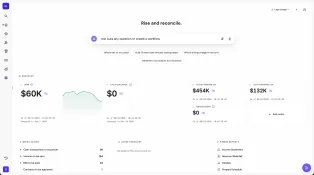
Rillet is an AI-native ERP software built for highgrowth startup, multi-entity companies, and enterprise accounting teams. The system connects to your existing CRM, billing, payroll, and banking tools to automate journal entries and shorten the monthly close.
Its core accounting features include a general ledger, bank reconciliation, close management, accounts payable and receivable, and the Aura AI assistant. Rillet also handles ASC 606 revenue recognition, multi-entity consolidation, and GAAP reporting with built-in SaaS metrics.
Pros
- Implementation in 4 to 10 weeks
- Advanced revenue recognition including ASC 606
- Multi-entity consolidations and intercompany reconciliations
- Flexible pricing model
Cons
- No inventory, manufacturing, or distribution support
- Accounts payable requires a third-party tool
Target Market
Multi-entity companies with complex revenue management. Great for startups and enterprises with 50-1,000+ employees. Common in SaaS, AI/Tech, and professional services organizations.Not Recommended For
Companies needing inventory, manufacturing, or distribution support.Video Overview
Core Accounting Key Features
- General Ledger: Contracts, invoices, and bills generate journal entries and populate built-in schedules for revenue waterfall, deferred revenue, prepaid expenses, and fixed assets. Create or update records in bulk through file upload or the REST API.
- Accounts Payable: Connects to an existing AP tool like Ramp, Brex, BILL, or Tipalti and posts bills and card transactions to the GL automatically. Pushes your chart of accounts and reporting categories out to that tool so spend gets coded at the source.
- Bank Reconciliation: Machine learning models match 95%+ of incoming bank transactions to invoices and bills, and return a ranked list of likely matches when no clear one exists. Connects to 12,000+ institutions through Plaid, with direct connections to banks outside Plaid such as J.P. Morgan Access and HSBC.
- Multi-Entity and Multi-Currency Consolidation: Records intercompany eliminations on every intercompany journal and calculates FX revaluations automatically. Toggle between consolidated and subsidiary views, and report in base currency while drilling into local-currency transactions.
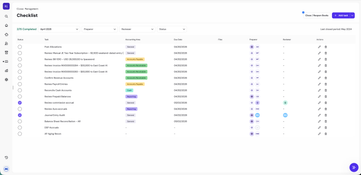
- Close Management: Customizable checklists assign tasks, owners, deadlines, and document uploads. Error detection flags manual journal entries in AR and AP aging that would create reconciliation differences.
- Financial Reporting: Every report runs on the live general ledger and drills from any figure down to the journal entry. Add custom rows and formulas for EBITDA or other non-GAAP lines, filter by department, group by entity, and save the view.
- Tax and Contractor Reporting: Built-in sales tax reports by tax type and location, plus a 1099 report export with contractor details for filing. Connect Avalara, Anrok, or Sphere to calculate and file tax on invoices directly.
- Compliance and Permissions: SOC 1 and SOC 2 Type II audited annually, with immutable approval logs and period locking by entity. Materiality-tiered approvals route entries by dollar value, such as $50,000 to the Controller and $500,000 to the CFO.
- Integrations and API: Native connections across CRM, payroll, tax, banking, spend management, billing, and FP&A. A REST API with sandbox environment, webhooks, and idempotency keys handles anything the connectors do not cover.
Revenue Automation Key Features
- Revenue Recognition: Generates ASC 606 and IFRS 15 schedules from contract terms synced out of Salesforce or HubSpot, with review and approval before anything posts to the ledger.
- Flexible Billing Models: Supports flat rate, usage-based, and milestone pricing, with usage uploaded through the API or CSV. Marketplace revenue from AWS Marketplace and app stores syncs invoices, payments, refunds, usage, and service fees.
- Contract Amendments: Amend in-flight contracts including product mix, pricing, invoicing, and revenue schedules, with every change reflected in the general ledger.
- Invoicing and Collections: Builds invoice schedules from contract details, then sends reminders and payment links and charges saved payment methods on autopay. Stripe contracts, invoices, products, and customers sync natively, and payments reconcile to invoices without manual matching.
- Standalone Invoices and AR Aging: Create one-off invoices manually, by template upload, or through the API. AR aging reports pull every invoice regardless of how it entered the system.
- Deferred Revenue and Customer Insights: Tracks revenue, invoicing, deferred revenue, usage, and MRR/ARR in a single per-customer view.
Aura AI Key Features
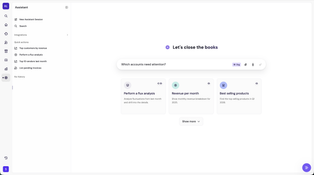
- Ledger Queries: Ask questions in plain language against live GL data to pull vendor activity, account balances, or any cut of the numbers, with figures sourced from the ledger rather than a copy.
- Workflow Agents: Define repeatable close tasks in plain English and Aura runs the schedule, the data pulls, and the handoffs. Each agent is scoped to a single accounting workflow.
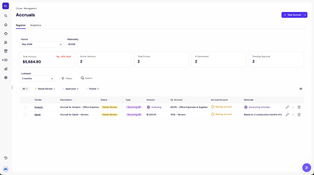
- Continuous Monitoring: Watches for anomalies and flags exceptions as the month happens, and predicts next month’s accruals by analyzing past vendor bills and service periods.
- Quick Entries: Posts recurring vendor transactions to predefined GL accounts and reporting categories, and suggests coding when a new vendor appears.
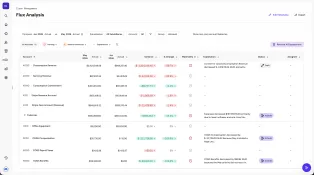
- Reporting Agent: Drafts board summaries and flux analyses from the current month’s data for you to edit rather than assemble.
- MCP Access: Read and write access to live books from Claude, Snowflake, or a BI tool through the Rillet MCP.
- Approval Controls: Every agent action is proposed to a human and nothing posts without approval. Each query, proposal, approval, and rejection is logged with a timestamp.
Rillet Pricing
Rillet does not publish pricing. Quotes are custom and based on the features you enable and your accounting complexity. There is no limit on the number of users, so adding finance staff, executives, or view-only stakeholders such as investors and auditors does not affect the price. Implementation is billed separately as a one-time fee.
Factors that affect pricing:
- Number of legal entities
- Transaction volume
- Number and type of integrations
- Revenue recognition complexity
- Complexity of implementation
Product Overview
Developer Overview


User Reviews of Rillet
No reviews have been submitted. Do you use Rillet? Have you considered it as part of your software evaluation process? Share your perspective by writing a review, and help other organizations like yours make smarter, more informed software selection decisions!