
IBM Maximo
1 Review 5/5 ★ ★ ★ ★ ★An enterprise asset management platform from IBM that helps large organizations monitor, maintain, and extend the life of critical assets and equipment.
Product Overview
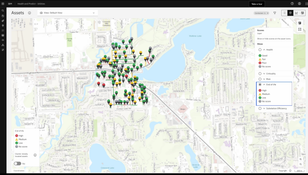
IBM Maximo offers a suite of enterprise asset management tools for organizations that operate and maintain critical physical assets and equipment. Developed by IBM, Maximo is built to cover the complete asset lifecycle, bringing together enterprise asset management (EAM), asset performance management (APM), and asset investment planning (AIP) under one platform.
IBM Maximo goes beyond the depth of standard CMMS software, helping facility and maintenance teams move towards modern condition and predictive maintenance strategies powered by IoT sensor data and AI analytics from WatsonX. Maximo is widely used in asset-intensive industries such as energy and oil, manufacturing, corporate facilities, transportation, and government.
Pros
- Built-in Watsonx AI-powered predictive and condition-based maintenance
- Unique AppPoints licensing structure enables pricing flexibility
- Industry-specific configurations
- Integrates with IoT sensors
Cons
- High implementation complexity
- Feature breadth too deep for small teams
- Inconsistent mobile app reliability
Target Market
Large enterprises and asset-intensive organizations in industries like energy, utilities, manufacturing, transportation, and government. For teams that need a unified platform for managing critical assets across multiple sites.Not Recommended For
Small to mid-sized businesses with straightforward maintenance needs or limited IT resources.Video Overview
IBM Maximo Features
IBM Maximo Application Suite is organized around several core capability areas, each addressing a distinct phase of the asset lifecycle. Together, they form a unified platform for managing, maintaining, and optimizing critical assets at scale.
Enterprise Asset Management (EAM)
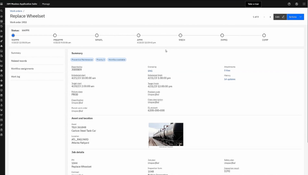
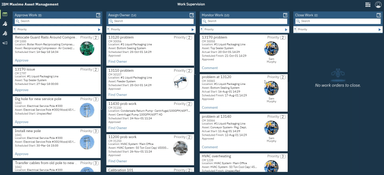
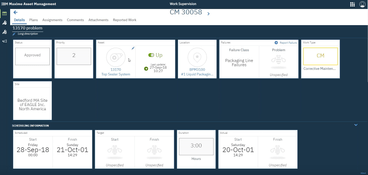
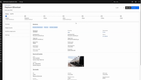
- Work Order Management: Create, assign, and track corrective and preventive work orders with automated workflows, failure codes, and full asset history tied to each task.
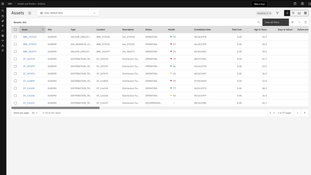
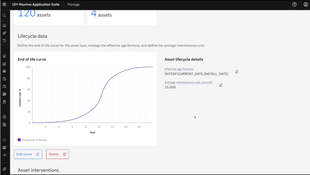
- Asset Lifecycle Tracking: Manage assets from procurement through decommissioning, tracking condition, cost, and maintenance history at every stage.
- Inventory & Spare Parts Management: Track MRO parts across multiple warehouse locations, automate reorder points, and link inventory directly to work orders to prevent stock-related delays.
- Preventive Maintenance Scheduling: Automate recurring maintenance tasks based on time, usage, or condition triggers to reduce unplanned failures.
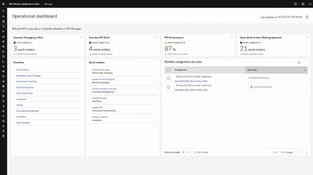
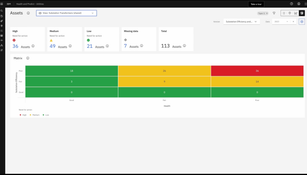
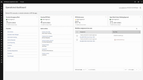
- Customizable Dashboards & Reporting: Configure dashboards to monitor asset health, work order status, and compliance KPIs, with export options for audits and external reporting.
Asset Performance Management (APM)
- Condition-Based Maintenance: Monitor real-time sensor data from IoT-connected assets to trigger maintenance based on actual asset condition rather than fixed schedules.
- Predictive Analytics: Use AI-driven models to identify early signs of asset degradation and forecast failures before they impact operations.
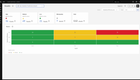
- Asset Health Scoring: Assign health, risk, and criticality scores to assets using data from multiple sources including Maximo Manage and connected IoT devices.
- Reliability Centered Maintenance (RCM): Conduct RCM studies to identify critical failure modes and build data-driven maintenance strategies around them.
- Maximo Condition Insight: AI-powered module that interprets real-time and historical asset data to surface health trends, flag anomalies, and recommend corrective actions.
Asset Investment Planning (AIP)
- Investment Scenario Planning: Generate and compare multiple capital investment scenarios in minutes using what-if analysis to respond to changing budget conditions.
- Lifecycle Cost Optimization: Identify the most cost-effective sequence of asset interventions and replacements based on lifecycle costs, risk, and KPI targets.
- Custom Value Frameworks: Define and weight objectives and KPIs specific to your industry or organization to align investment plans with strategic goals.
- Regulatory Transparency: Document and justify investment decisions to support compliance reporting and stakeholder accountability.
Field Service & Mobile
- Maximo Mobile: Native mobile app giving field technicians access to work orders, asset history, and inventory in real time, with online and offline support.
- Intelligent Scheduling & Dispatching: Automate technician scheduling and dispatching based on skills, availability, and location to improve first-time fix rates.
- AI Optimizer: Uses machine learning to create efficient field schedules, forecast resource needs, and adapt to last-minute changes or emergency work orders.
- Remote Expert Assistance: Technicians can connect with remote experts through virtual collaboration and visual annotations to resolve complex issues in the field.
- Visual Inspection (MVI): AI-powered computer vision tools let technicians train and deploy defect detection models via a drag-and-drop interface on mobile or edge devices.
Health, Safety & Environment (HSE)
- Permit-to-Work Management: Link permits directly to work orders and assets, with support for lockout/tagout procedures and qualification tracking for high-risk tasks.
- Incident & Hazard Tracking: Manage safety incidents, hazard identification, and corrective actions with end-to-end tracking and investigation tools.
- Emissions Management: Monitor continuous and fugitive emissions in real time, with dashboards for compliance tracking and corrective action.
- Management of Change (MOC): Govern the full lifecycle of operational and engineering changes from initiation through approval and closure.
- Compliance & Audit Readiness: Track regulatory requirements, automate audit trails, and associate compliance data with work orders, assets, and safety records.
Inventory Optimization
- AI-Driven Stock Recommendations: Continuously analyze usage patterns and asset criticality to recommend optimal reorder points and stock levels for spare parts.
- Excess Inventory Identification: Flag slow-moving or potentially obsolete inventory to reduce carrying costs without increasing stockout risk.
- Critical Spares Availability: Predict future parts usage with AI to ensure the right components are available before maintenance events occur.
- Multi-Source Integration: Connects with existing EAM and ERP systems to pull inventory and demand data into a single optimization workflow.
IBM Maximo Pricing
IBM Maximo Application Suite is available as a SaaS platform or as a self-managed software option for organizations that prefer to host the suite on their own infrastructure. All plans require a minimum 12-month contract.
- Essentials: Entry-level plan for organizations getting started with Maximo. Includes one of six available modules. It starts at just under $40,000 per year, or around $3,300/month, depending on the selected module.
- Standard: Full suite SaaS plan that bundles all core Maximo modules under a single price. Standard pricing is quote-based.
- Premium: Builds on Standard with additional configurations and enterprise options, including disaster recovery, extended data retention, and deployment validation for regulated industries. Custom quote required.
- Software Only (Client Managed): Full suite deployable on-premises or through third-party cloud hosting, including AWS, Azure, and Google Cloud. Custom quote required.
A free trial is available for Maximo Manage and Maximo Health. Prices are indicative and may vary by country.
Product Overview
Developer Overview
User Reviews of IBM Maximo
Write a Review
IBM Maximo Review
The primary uses we have at Universal Studios for Maximo is for our ride and attraction maintenance. A lot of our technicians who work on the rides and ensure the safety of our guests leverage Maximo through the work order module. We manage our inventory and spare parts through Maximo. All of our procurement too. We’ve rolled out Maximo Anywhere which helps us in the field to be more effective in our inspections.
For us in parks technology, we’re handling upgrades and making sure we’re on the latest technology. We used to only leverage only 50% of it’s capabilities and we’re up to 90% now and using a lot of modules. We’ve elevated our usage and collected data to make more informed decisions.
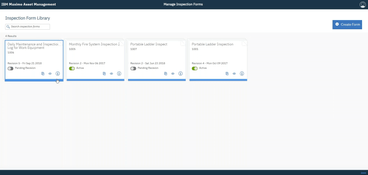
Quality inspections will now have reference pictures and videos to show our operators what the attraction should look like from a guest experience standpoint. Checks in the morning and evening will ensure our guests have a positive experience.