

The Best CPG ERP Software
We compared the leading ERP platforms built for consumer packaged goods (CPG) brands, from in-house process manufacturers to asset-light brands that outsource production.

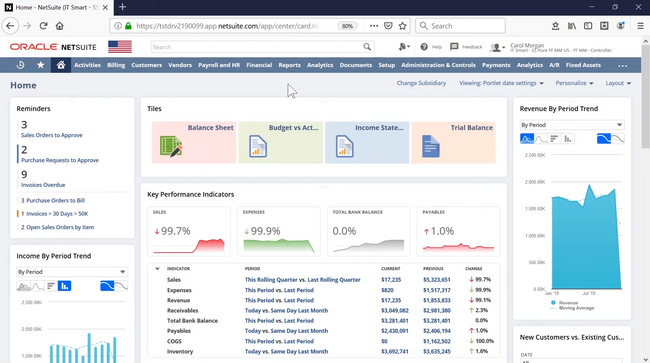
- Hundreds of third-party add-ons available
- Feature sets for multiple industries
- Highly customizable
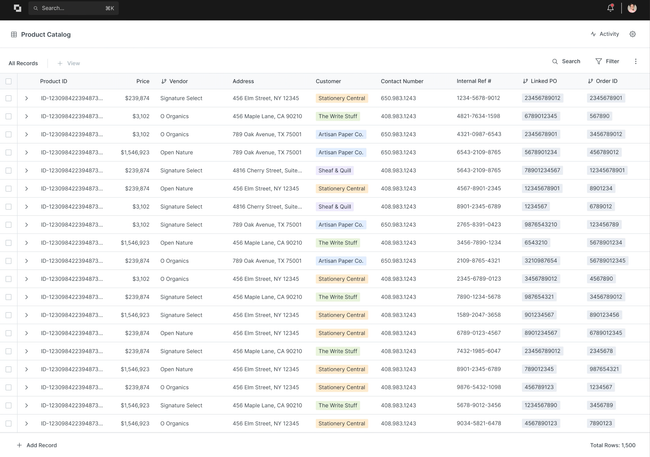
- Composable and adaptable platform
- Faster implementation than legacy ERPs
- Modern interface and architecture
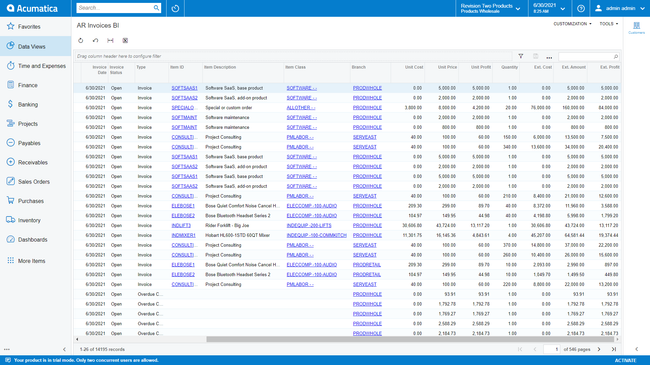
- Open architecture for rapid integrations
- Multi-entity support
- Mobile accessibility
Consumer packaged goods ERP software gives complete inventory and supply chain visibility to ensure optimized production and efficient processes. We used our advanced review methodology to select the top options, including NetSuite, DOSS, and Acumatica.
- NetSuite: Best for Multi-Channel Brands
- DOSS Operations Cloud: Best for High-Growth Brands
- Acumatica: Best for Asset-Light Brands
- Deacom ERP: Best for Food & Beverage Brands
- Dynamics 365 Business Central: Best for Sales & Customer Management
NetSuite - Best for Multi-Channel Brands
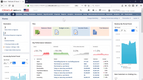
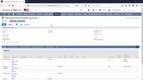
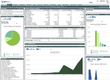
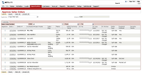
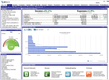
NetSuite’s multi-channel retail management feature can help you control operations, including inventory, orders, customer data, and financials across various sales outlets. The system integrates its ERP capabilities with its POS and eCommerce modules, enabling real-time data flow between online platforms, physical locations, and back-office systems.
For example, you specialize in haircare products and operate both physical stores and an online shop. A customer purchases a shampoo and conditioner duo set online. NetSuite will check inventory across all stores and warehouses to ensure the product is available, then reserve the items and update your stock levels.
The customer would like to do pickup at their nearest store, so the system will reroute the order to that location and notify your staff via the POS system. NetSuite also lets you look up customers’ purchase histories and send follow-up emails suggesting complementary products, like leave-in masks or heat protectants, to drive sales further.
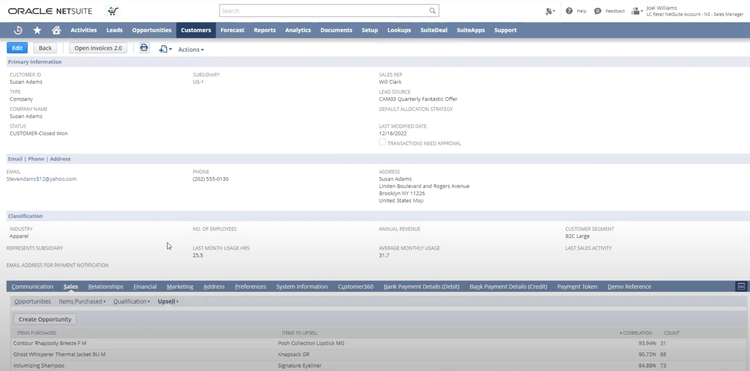
However, NetSuite can get pretty expensive with added modules, with prices ranging from $3,000 to $8,500, making it less suitable for smaller CPG companies. Still, it’s a strong option for brands that manufacture in-house or outsource to focus on distribution and financials.
Visit NetSuite’s review page for more information on the ERP.
DOSS Operations Cloud - Best for High-Growth Brands
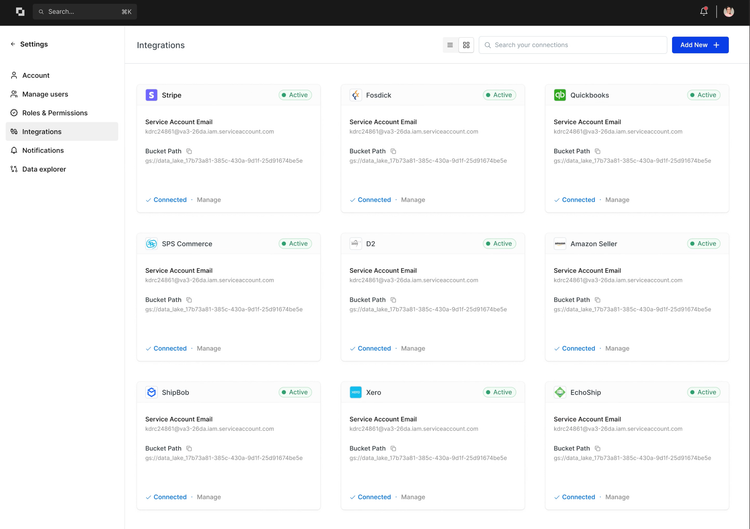
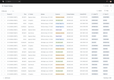
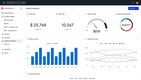
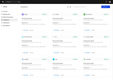
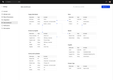
DOSS Operations Cloud runs on an adaptive, no-code platform you can reshape as your operations change, without the multi-month re-implementation a legacy ERP forces every time a process shifts. That flexibility matters most when a brand is scaling fast, and its workflows look different each quarter.
Say you’re a DTC food brand moving into retail and wholesale at the same time. DOSS consolidates orders from all channels into a single queue and lets you set routing rules to meet a new retail partner’s compliance requirements. Plus, it automates invoice generation and fulfillment handoffs so order volume can climb without more headcount. The demand planning sits on an Excel-like interface and feeds procurement and inventory directly, which helps when you’re forecasting through fast growth rather than steady-state.
DOSS is a great fit for brands that both manufacture and distribute all types of products, including food and beverages. It combines inventory and manufacturing modules with accurate demand planning and fulfillment. One thing to note, though, is that you’ll need to integrate your own accounting system with this one, rather than a traditional ERP that has it built in.
Acumatica - Best for Asset-Light Brands
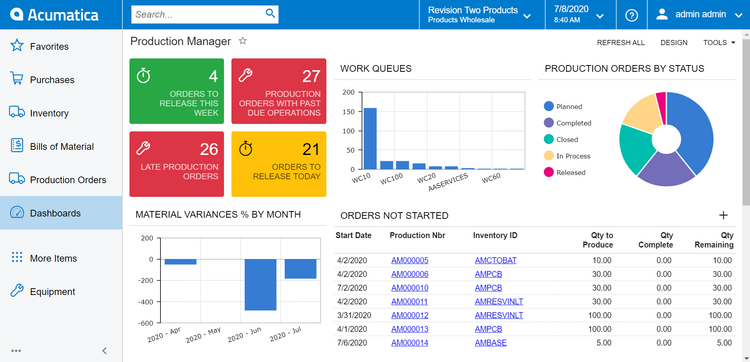
Acumatica’s Distribution edition centers on purchasing, multi-location inventory, and order management. This makes it a strong option for brands that own the product but outsource production to a co-packer. So instead of shop-floor scheduling, the workflow you care about runs from the purchase order outward.
Say you’re a beverage brand that contracts production to a co-manufacturer and stores finished goods across two 3PL warehouses. In Acumatica, you issue the production PO to your co-packer, receive the finished batches into the right warehouse, and track landed cost so freight and duties roll into your true per-unit margin rather than getting lost. And as orders come in from multiple channels, it routes them against live stock at each location.
Acumatica supports both perishable and non-perishable items, too. In routing, it can apply lot and expiration tracking, so you can run a recall or pull short-dated inventory without digging through spreadsheets. This is crucial for any brand that moves perishable products.
As for pricing, Acumatica uses a consumption-based model instead of the typical user-based model for your licensing fee. This can help businesses that need to give occasional access to a 3PL contact or broker without driving up their per-user cost. Still, expect to pay anywhere from $1,800 - $6,500/month for the license.
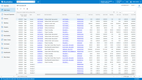
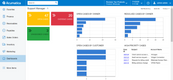
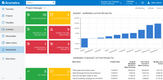
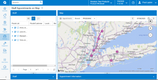

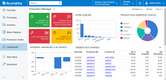

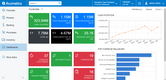
For more information on Acumatica, visit our product review page.
Deacom ERP - Best for Food & Beverage Brands
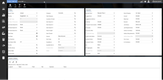
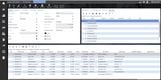
Deacom ERP is a process-focused manufacturing ERP, making it a great option for food and beverage brands that produce and distribute in-house. It offers a strong production development and quality control module that lets you build, adjust, and scale formulas while enforcing QC checks. This is essential for anyone making batches from raw ingredients rather than assembling parts.
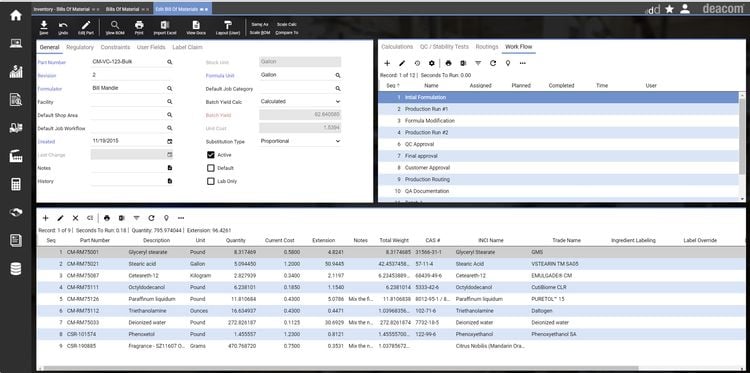
In Deacom, you scale the recipe, and the system automatically recalculates ingredient quantities, catch weights, and costs. Then, it ties each batch to a lot you can trace from the raw-material receipt through finished-goods shipment. Because it’s a single system with no bolt-ons, the same database that runs production also generates the regulatory paperwork, like nutritional labels. So for regulated CPG categories like food and beverage, or even cosmetics or nutraceuticals, it’s a great option over a general-purpose ERP.
Deacom comes in two editions: Deacom Essentials for small- to mid-market brands and Deacom Enterprise for larger companies. Unfortunately, pricing requires a custom quote. And the learning curve is a bit steep, but that’s expected for any all-in-one ERP.
Dynamics 365 Business Central - Best for Sales & Customer Management
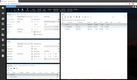
Dynamics 365 Business Central folds customer relationship management into the same system that runs your orders and financials. That way, your team that sells to retail buyers and manages wholesale accounts works from the same record as the team that fulfills and invoices. For a CPG brand whose growth depends on keeping accounts, that connection is an advantage.
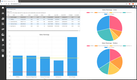
Say your sales reps are working on a new regional grocery chain. In Business Central, they can track the opportunity, store the account’s negotiated pricing and order history, and manage the back-and-forth from inside Outlook. Once an account is in the system, you can keep account-specific pricing and discounts. From there, use Power BI dashboards to see which customers and SKUs are driving margin.
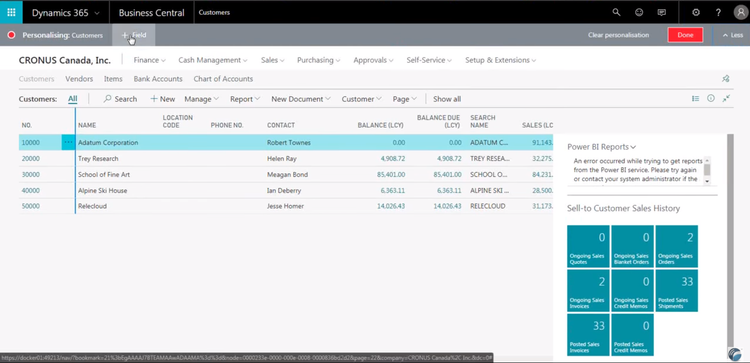
Dynamics 365 Business Central has public licensing pricing: $80/user/month for the Essentials plan, and $110/user/month for the Premium. The software also comes with a free 30-day trial to test the system before purchasing. However, keep in mind that Dynamics 365 Business Central has implementation costs that you will need to account for in addition to the subscription price.
Read our full Dynamics 365 Business Central review for more details and pricing information.
What is CPG ERP Software?
ERP software for CPG brands is a system that unifies financials, inventory, supply chain, and order management in one platform, built for the way consumer packaged goods companies actually operate. It’s distinct from the broader set of CPG tools, point solutions for analytics, trade promotion, or retail execution, in that an ERP is the system the rest of those tools connect to.
What separates a CPG ERP from a generic one comes down to a few consumer-goods realities: lot and expiration tracking for recall readiness, demand planning for seasonal and retailer-driven spikes, and order management across direct-to-consumer (DTC), marketplace, and wholesale channels simultaneously. How much manufacturing depth you need depends on your operating model. Brands that produce in-house tend to need formula and material requirements planning (MRP software) capabilities, while asset-light brands that outsource to co-packers care more about purchasing, multi-location inventory, and landed cost.
Key Features
| Key Feature | Description |
|---|---|
| Inventory Management | Track stock across warehouses and third-party logistics (3PL) sites in real time, with lot, batch, and expiration data attached to every unit for fast recalls and first-expired-first-out (FEFO) rotation. |
| Order Fulfillment | This automates order processing, ensuring accuracy by eliminating manual entries. All orders are stored in a database for easy reference and documentation. |
| Demand Planning & Forecasting | Predict demand from historical sales, seasonality, and promotions, then feed those numbers into purchasing and production so you order to actual need. |
| Compliance & Recall Management | Lot-level audit trails and document generation (certificates of analysis, nutritional labels, safety data sheets) for regulated categories. |
| Financial Management | Run reports and financial analysis using real-time data from the software. Visualize profits, expenses, and cash flow. |
| CRM | Manage accounts, contacts, and sales teams to enhance customer relationships. |
| Sales | Streamline different sales channels such as eCommerce, B2B, and wholesale for fast data consolidation. Manage all revenue streams directly from the system. |
| Manufacturing & Formula Management | For in-house producers, recipe and bill of materials (BOM) tools, batch production, and MRP that scales formulas and schedules raw materials. |
Primary Benefits
There are several advantages to implementing CPG software for your manufacturing or distribution business. Some of the most impactful include:
Efficient Product Development
Producing consumer goods can be complex, with many variables susceptible to causing delays, such as recalls and incorrect orders. The software aims to manage every aspect of the manufacturing and distribution process for various products. This helps make companies more efficient because managing the product lifecycle is much easier with oversight of every process.
Enhanced Traceability
Businesses can use these systems to track every product that gets packaged and shipped, making it easier to trace the product and where it gets shipped and delivered. Features like lot and batch tracking enable businesses to locate products and trace them back to their source. This is useful during product recalls, as companies must identify all the products involved.
One System Across Channels
As a brand adds DTC, marketplace, and wholesale at once, disconnected tools start to disagree on what’s in stock. An ERP keeps inventory, orders, and financials on one set of numbers, which tends to matter more the faster a brand grows.
Organized Production Data
Supply chain management and visibility are critical for all CPG manufacturers and distributors. These systems allow total supply chain control from procurement to the final sale, enabling businesses to enhance daily processes, automate tasks, and identify market shifts and trends.
Pricing
CPG systems can vary in price, from Dynamics 365 Business Central, which costs $80/user/month, to NetSuite, which can be upwards of $8,500, depending on your needs. The price depends significantly on your business size, the features you require, and whether your system is a WMS or MRP that integrates with your current software or a full ERP replacement. Most systems use a tiered system, where the price increases as more features are added.
- Entry-level (around $70–$100/user/month): Smaller brands needing core financials and inventory. Example: Dynamics 365 Business Central.
- Mid-range (roughly $2,800–$6,500/month, or custom): Growing mid-market brands needing deeper distribution or operational depth. Examples: Acumatica, DOSS (quote-based).
- High-end and enterprise ($3,000–$8,500/month and up, or custom): Larger brands and in-house process manufacturers. Examples: NetSuite; Deacom (custom, typically brands from $10M to $100M+ in revenue).