
The Best Textile ERP Software
We compared the top textile ERP systems for mills, fabric producers, and home furnishings brands on production planning and inventory.

- Open-source architecture
- Multilingual support
- Highly customizable
- Scalable modular implementation
- Flexible business process adaptation
- Built for textile and apparel manufacturing, from fiber to garment
- Inventory & order management tools built for apparel
- Integrates with leading eCommerce and accounting platforms
- ERP designed specifically for apparel industry
We used our software review methodology to evaluate and rank the top systems on the market. If you design or sell finished garments, see our apparel ERP roundup instead.
- ERPNext: Best Raw Material Management
- InStyle Software: Best for Home Furnishings Brands
- Datatex NOW: Best for Production Planning and Scheduling
- MRPeasy: Best for Small Manufacturers
- Plex: Best for Nonwovens Manufacturers
- Infor MES: Best MES Option
ERPNext - Best Raw Material Management
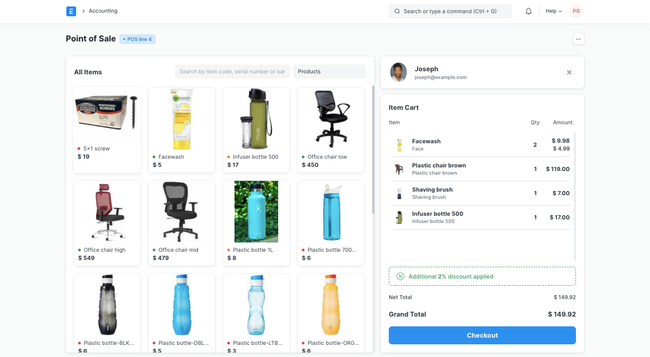
ERPNext is an open-source ERP that ties purchasing, inventory, and production together, so you can see what’s in stock, what’s on order, and what upcoming production will consume. For a mill juggling yarn counts, colors, and dye chemicals, that visibility helps you buy what production needs without overstocking.
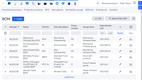
ERPNext links raw material inventory to each product’s bill of materials (BOM). When a production order is created, the system references the BOM to determine the required raw materials and quantities. The system will continuously update inventory levels as they’re procured, consumed in production, or moved between warehouses.
For example, maybe you’re a medium-sized textile manufacturer who struggles with frequent stockouts of cotton yarn and surplus dyes. This causes production delays and increased holding costs. With ERPNext, you can generate a raw material requirement plan based on upcoming production orders for fabric types, such as lightweight cotton and denim. The software automatically raises material requests for cotton yarn, thread, and dyes, which you can convert to purchase orders.
Upon delivery, the system triggers a quality inspection. Here, you can test your cotton yarn for tensile strength, and the system will only add the approved batches into your inventory.
ERPNext is free to download and customize yourself. Frappe, the company behind it, also offers managed cloud hosting starting at $5/month, with no per-user fees.
InStyle Software - Best for Home Furnishings Brands
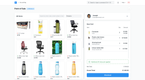
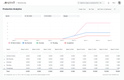
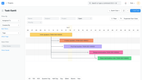
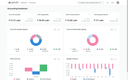
InStyle is an ERP from InStyle Software, a California vendor that builds for fashion businesses. Apparel is its core market, but the company also lists home furnishings among the businesses it serves. That makes it a fit for companies that sell finished bedding, bath, or table linens to retailers, rather than companies producing the fabric itself.
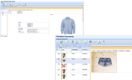
The capability that matters most for this group is multi-level carton control. You can define master packs, inner packs, and assortments, so a case of bath towels mixed across colors can ship as one unit that matches the retailer’s purchase order. InStyle’s warehouse module builds on this with retail compliance tools for labels, carrier routing, and manifests, along with bin location mapping and cycle counting on RF handheld devices.
Orders from retailers can come in through InStyle’s EDI module, which is part of the core system rather than a separate add-on. It covers documents such as 850 purchase orders, 856 advance ship notices, and 810 invoices, and EDI orders run through the same process as your manual and eCommerce ones. The vendor says it has specific features for retailers like Walmart and JCPenney.
InStyle is built around apparel, so expect tools for size runs and style matrices that a home furnishings brand may not need. It’s also not a mill system. We found no documentation of lot, dye-lot, or roll tracking, so fabric producers should look at Datatex NOW instead.

Datatex NOW - Best for Production Planning and Scheduling
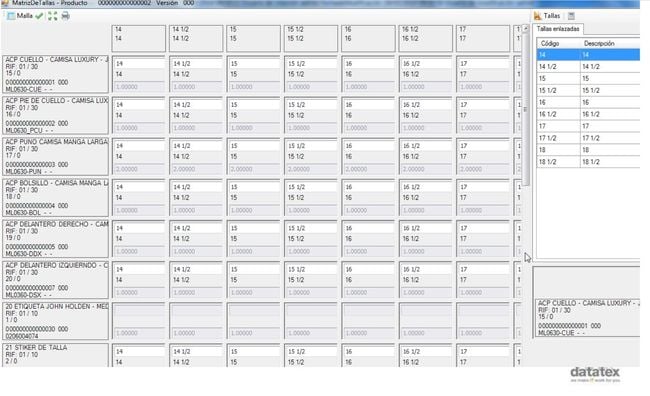
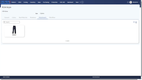
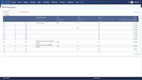
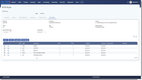
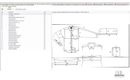
Datatex NOW ERP is built for the textile industry and covers production from fiber through finished goods. Its scheduler builds a production plan around machine availability, materials, and delivery dates, so you can avoid resource conflicts and keep orders on time.
The system takes input such as customer orders, raw material availability, machine capacity, and workforce schedules. For example, if you’re a textile manufacturer who produces custom fabrics for apparel brands, you can evaluate the availability of dyeing machines, weaving looms, and skilled labor.
The software will schedule the production of the most urgent order first while ensuring that other orders proceed without resource conflicts. It will also ensure that each fabric’s specific yarns and dyes are procured and available when production begins.
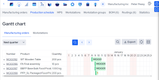
Using Gantt charts, you can see if there are any potential delays in production, such as planned machine maintenance. The software automatically adjusts the schedule, shifting other tasks to underutilized resources. If there are any production delays, such as a machine jam that slows the weaving process, Datatex NOW will immediately reschedule the remaining tasks and notify your maintenance team, minimizing the impact on overall timelines.
The production schedule can sync with your logistics partners, ensuring the finished fabrics are dispatched to customers promptly.


MRPeasy - Best for Small Manufacturers
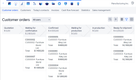
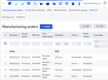
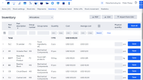
MRPeasy is a cloud-based production planning and inventory system priced per user, so you only pay for the people who use it. It’s tailored for businesses with 10 to 200 employees. For a small mill or fabric converter, its production planning and reporting help you promise realistic lead times, and its real-time inventory overview helps prevent stock-outs of yarn and dyes while keeping inventory levels low.
The capability that matters most for textile work is lot tracking, which is included on every pricing plan. When you receive yarn or dyes, MRPeasy assigns each batch its own lot number and carries it through the production orders that consume it. If a customer reports a shade or strength problem, you can trace the finished lot back to the production order and material purchases. MRPeasy also manages expiration dates (Professional plan and above), which can help track dyes and chemicals with limited shelf lives.


Plex - Best for Nonwovens Manufacturers
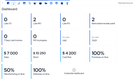
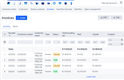
Plex is a cloud-based manufacturing platform that combines ERP with a manufacturing execution system (MES) and quality management. That tight link between machines, quality checks, and inventory suits nonwovens production, where fiber goes in one end of a line, and finished pads or rolls come out the other.
The capability that matters most here is lot traceability. Plex tracks materials from receipt through production, down to when each incoming vendor bale was consumed, so you can tie a finished roll back to the raw fiber that went into it. That production data can also expose waste. A nonwovens manufacturer found that one of its lines produced five times more scrap than another, which gave the team a specific target for corrective action.
Quality checks are built into the production workflow, too. Operators can’t start a run until required digital checksheets are complete. The same manufacturer used them to replace its paper check sheets, went live in just over five months, and raised overall equipment effectiveness (OEE) by 10% at one of its plants.
Plex’s customer base leans toward automotive, plastics, and metals, so don’t expect textile-specific tools like dye recipe management or loom scheduling. Support also costs extra, and the interface takes time to learn.
Infor MES - Best MES Option
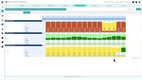
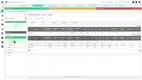
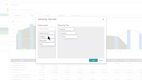
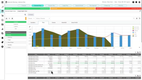
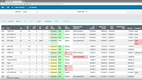
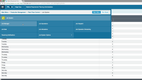
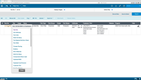
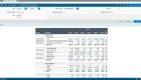
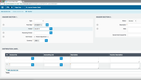
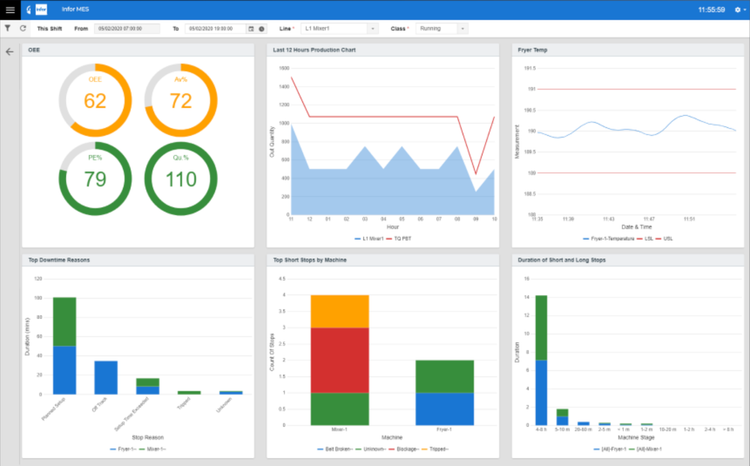
Infor MES is a manufacturing execution system that digitizes manufacturing operations and integrates with ERP systems. It connects to plant equipment and systems to collect production data, so you can see machine performance and output as work happens.
Infor MES can enhance quality control by capturing inspection results and flagging deviations as they occur. For textiles, where fabric quality, dye consistency, and pattern accuracy are crucial, that means problems surface while there’s still time to correct them. It also includes traceability within its quality tools, which can help you meet customer and regulatory requirements.
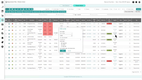
Infor MES also includes maintenance management. It can automatically schedule maintenance based on machine cycles, piece counts, or detected events, and operators can raise requests and view planned work on mobile devices, which can lead to fewer unplanned breakdowns.
Keep in mind that Infor MES isn’t an ERP. You’ll still need a separate system for accounting, purchasing, and order management, though Infor MES can send maintenance costs and spare parts usage back to it.
What Is Textile Software?
Textile software helps mills, fabric producers, and home furnishings brands manage the process of turning fiber into fabric and finished goods. It provides tools for production processes, inventory, sales, supply chain operations, and managing raw materials like yarn and dyes.
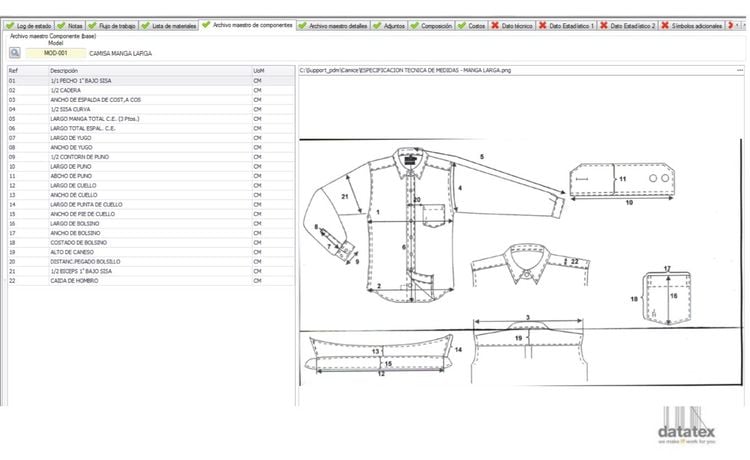
Depending on the system, other features can include fabric design and computer-aided design (CAD), product development, production scheduling for equipment like looms and dyeing machines, and lot tracking that follows yarn and dye batches through production.
Key Features
- Design: Handles the image creation and editing involved in fabric designs. Includes repeats and separations, coloring, color-matching, presentation boards, engravings, tones, and more.
- Sales Order Management: Streamlines order processing by helping capture, track, and fulfill orders across multiple sales channels. Connects inventory and sales orders, creates shipping schedules, tracks fulfillment, and produces reports.
- Production Scheduling: Plans production on your shop floor by matching orders to available machines, materials, and labor. Textile systems can assign work to specific equipment and rework the schedule when a machine goes down.
- Inventory Management: Tracks yarn, greige goods, and finished fabric down to the roll or piece. Textile systems can track the same stock in several units of measure at once, such as weight, length, and packaging, and separate stock of the same item by quality level.
- Lot and Batch Traceability: Assigns lot numbers to yarn, dye, and fabric batches, so you can trace a finished roll back to the raw materials and production run behind it. If a customer reports a defect, you can pull every roll from the affected batch instead of recalling the whole order. You can also fill each order from a single dye lot, so the shades match from roll to roll.
- Recipe and Color Management: Stores dye recipes and tracks lab dips through approval, so an approved color can be reproduced in production. Some mills handle this in dedicated color lab software that connects to the ERP.
- Quality Grading: Records fabric inspection results and grades each roll. Many mills use the 4-point system (ASTM D5430), which assigns 1 to 4 penalty points per defect and normalizes the total per 100 square yards to decide whether a roll ships as first quality.
- Purchasing: Creates purchase orders for yarn, dyes, chemicals, and other supplies, including product type, quantity, and pricing.
- Maintenance Management: Creates work orders for maintenance activities (such as preventive maintenance tasks and predictive maintenance scheduling) to help limit machine and equipment downtime and lengthen the lifecycle of assets.
- Electronic Data Interchange (EDI): Exchanges business documents with customers and suppliers in a standard electronic format, such as purchase orders, advance ship notices, and invoices. Home furnishings brands selling to large retailers often need EDI to meet retailer requirements.
Primary Benefits
Plan Production Around Real Capacity
Many textile companies choose to use advanced planning and scheduling (APS) software functionality to meet their production needs. This process helps designate raw materials and production capacity to balance demand and plant capacity to their optimal fulfillment level.
In other words, it can plan and schedule production based on available materials, labor, and equipment—all while tracking costs and OEE and improving MRP.
If cutting costs is your priority, look at how each system builds its production schedule. Some textile scheduling systems let you weight factors such as due dates and production costs, so the schedule reflects what matters most to you. Others let you reserve specific machines for sampling and track those costs in detail, so trial runs don’t disrupt regular production.
Manage Lot and Roll Inventory
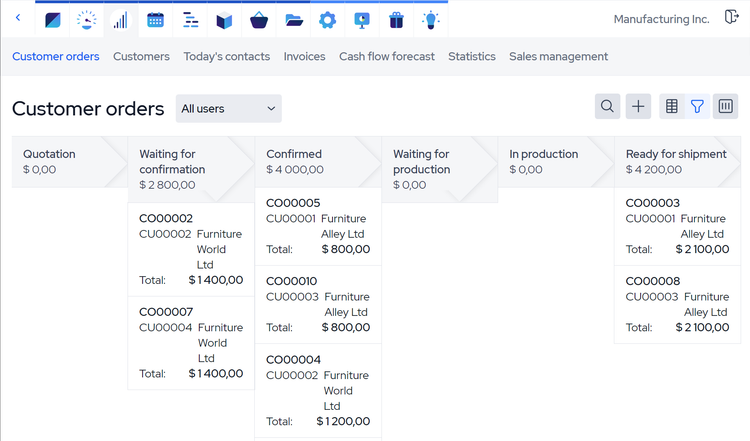
Textile inventory rarely fits a single unit of measure. Yarn often arrives by weight on cones, finished fabric usually ships by length on rolls, and the same stock may need to be tracked both ways. Textile software can record each roll or batch with its own lot number, weight, and length, so your stock levels match what’s actually in the warehouse.
Dye lots add another layer. Fabric from two dye batches of the same color can vary slightly in shade, so many mills keep them separate and try to fill a customer’s order from one batch. Tracking dye batches, yarn cones, and woven bolts at this level also makes cycle counts more accurate, since your counts can account for fabric shrinkage instead of treating every discrepancy as lost stock.
Finally, solid inventory management in textile software can help simplify purchasing and vendor management. You can record vendor details such as contact info and price lists, which lets you grade your vendors based on cost and performance. Converting a purchase request into a purchase order quickly can also help keep procurement within budget.
Provide Accessibility Through Mobile and Cloud Networks
Many ERP systems are online—eliminating the need to work at a single location. Employees can use web-based applications to access the system from anywhere—whether they are on a sales call, conducting quality checks at another location, etc.
Cloud solutions also deliver your provider’s latest updates as soon as they’re released, without requiring a manual upgrade.
Cloud-based ERP software also lets your employees access the solution from many devices, such as laptops, tablets, and smartphones. Allowing users to have real-time data access lets managers see current production and inventory data without waiting on manual data entry.
Textile Software vs. Apparel Software
Vendors often use these terms interchangeably, but the right fit depends on where you sit in the supply chain.
- Textile software fits companies that turn fiber into fabric or finished home goods, including spinning and weaving mills, knitters, dyehouses and finishers, nonwovens producers, and home furnishings brands. These buyers usually need lot and dye-lot traceability, machine and loom scheduling, and inventory tracked by length or weight.
- Apparel software fits companies that turn fabric into garments, including fashion brands, cut-and-sew manufacturers, and wholesalers. These buyers usually need style, color, and size matrices, season planning, and retailer order management.
If you’re on the garment side, see our Best Apparel ERP Software roundup. Datatex NOW covers fiber through garment, while most apparel ERPs tend to start at finished fabric.
Pricing
Textile ERP pricing varies widely based on company size, the modules you need, and how much customization your processes require. Below are typical annual software costs, which don’t include implementation.
- Entry-Level: Under $20,000/year. Small mills, converters, and home furnishings brands that need production planning, inventory, and lot tracking without heavy customization. ERPNext is free to self-host, with managed hosting from $5/month. MRPeasy runs $49 to $149 per user/month, and InStyle starts at $199/month.
- Small to Midsize: About $20,000 to $100,000/year. Growing manufacturers with multiple production steps, more users, and integrations with shipping, EDI, or ecommerce. Costs usually depend on user count and add-on modules. Plex falls in this range, with third-party listings putting it at around $3,000/month, or about $36,000/year.
- Enterprise: $100,000+/year. Large, multi-site textile operations that need fiber-to-fabric traceability and deep customization. Examples include Datatex NOW and SAP S/4HANA. Both are priced by quote.