

Top NetSuite Competitors & Alternatives
We’ve evaluated the best NetSuite alternatives on the market to find options that support different operations, including small businesses and manufacturers.

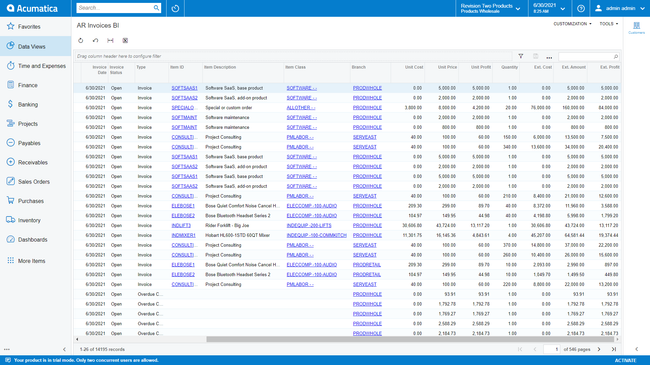
- Open architecture for rapid integrations
- Multi-entity support
- Mobile accessibility
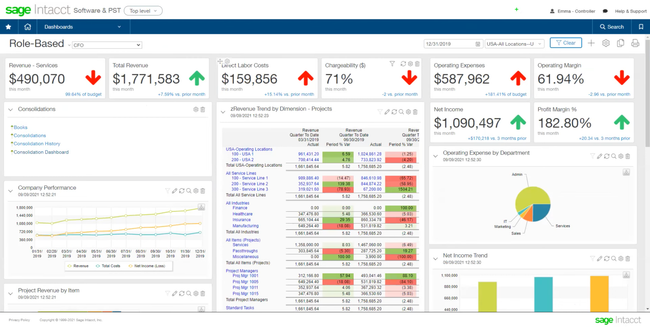
- Multidimensional reporting capabilities
- Scalability for multi-entity support and user growth
- Simple and responsive user interface
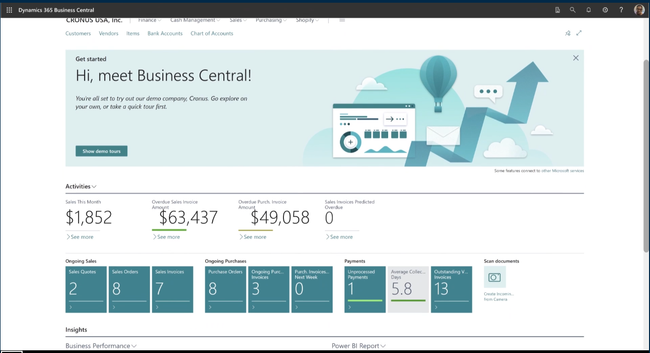
- Combined ERP and CRM
- Similar interface to MS Word and Outlook
- Integrations with Microsoft applications
NetSuite is one of the most popular ERPs on the market, but it does have its drawbacks. In this guide, we’ve ranked the top NetSuite alternatives.
- Acumatica: Most Customizable
- Sage Intacct: Best Accounting Tools
- Microsoft Dynamics 365 Business Central: Most Straightforward Pricing
- xTuple: Best for Manufacturing
- DigitBridge: Best for Distribution
- Odoo: Best Retail Platform
Acumatica - Most Customizable
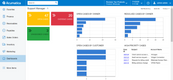
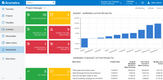
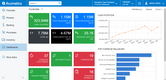
Acumatica is one of the closest alternatives to NetSuite for professional services, manufacturing, distribution, construction, and retail industries. You can deploy this ERP however you want (cloud, private cloud, or on-prem), and total costs depend on usage rather than headcount. Acumatica can often be more affordable simply because you’re not paying for every seat.
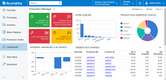
The differences show up in daily work. Where NetSuite is feature-rich out of the box, it’s harder to tailor screens to how your team actually works. Acumatica, meanwhile, offers low-code customizations and self-service. You can drag and drop fields, build custom forms, and personalize dashboards without waiting on a developer or SuiteScript consultant. While NetSuite has some of these options, it can be more complex and requires technical expertise.
Another key difference is how the systems are priced. NetSuite deploys a user and module-based pricing model, while Acumatica is sold modularly and deploys a “pay for what you use” approach. Smaller teams often land around $3,000 per month, while mid-sized firms fall closer to $5,000. By contrast, NetSuite starts from around $1,200-$6,000/month with a $129/user/month fee.
If your entire staff, like a consulting agency or architecture firm, needs regular access, NetSuite gets significantly more expensive. If you run large transaction volumes with fewer people, Acumatica may creep up as you grow.
However, NetSuite has more advanced financial features than Acumatica. While they both include a core accounting suite, NetSuite goes a step further with its consolidated financial reporting and multi-currency support for global corporations.


Learn more on our Acumatica vs. NetSuite page.
Sage Intacct - Best Accounting Tools
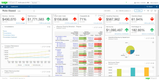
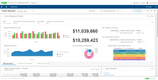
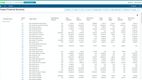
Sage Intacct is a cloud accounting software and direct competitor to NetSuite; it offers strong financial management capabilities. In fact, it’s the only software endorsed by the American Institute of Certified Public Accountants (AICPA), as it meets their functionality and reliability standards. It features multi-entity support, advanced revenue recognition, and project accounting features that match NetSuite’s.
Intacct feels smoother and more navigable than NetSuite’s sprawling interface. Its workflow automation tools handle approvals, journal entries, allocations, and period closes in far fewer clicks. Where NetSuite is a full operational suite, Intacct is finance-first. Still, it offers editions built for construction, services, and light distribution and manufacturing.
Sage Intacct’s pricing is on the higher side, as you can expect a minimum of $8,000/year for a single-user system. Most teams land higher based on modules and entities. Even so, Intacct often undercuts NetSuite for smaller businesses that don’t need full supply chain or manufacturing. Its financial capabilities rival NetSuite’s at a lower cost.

Visit our NetSuite vs. Sage Intacct Comparison Guide for more info.
Microsoft Dynamics 365 Business Central - Most Straightforward Pricing
Microsoft Dynamics 365 Business Central’s pricing starts at $80/user/month for the Essentials plan. It includes unlimited users, CRM, accounting, and inventory modules. While there are still additional implementation and service fees, this makes it much more affordable compared to NetSuite.
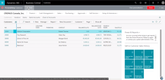
What makes Business Central appealing as a NetSuite ERP alternative is familiarity. The Microsoft interface looks and feels similar to the Word and Outlook applications. It also integrates with all Microsoft Office tools. You can pull reports through Power BI, run user-specific workflows with Copilot, and push transactions through Excel. This can cut your onboarding time way down compared to NetSuite.
NetSuite scales further into complex supply chain operations. However, many mid-sized businesses find Business Central simpler to configure and adopt. Additionally, its licensing remains simpler than NetSuite’s modular structure. Business Central provides strong financial and inventory tools without a steep implementation curve.

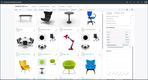
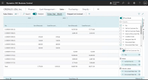
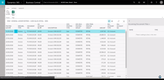
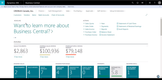
To learn more, visit our Dynamics 365 Business Central vs. NetSuite comparison page.
xTuple - Best for Manufacturing
xTuple mirrors how real shop floors operate for small and mid-sized factories:
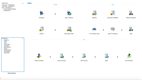
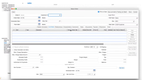
- Work orders show every operation step
- Travelers include pick lists, barcoded labels, and routing
- Shop-floor time clocks let workers punch in and report production
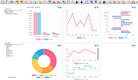
Everything ties directly into costing, scheduling, and inventory, so it’s easier for you to see bottlenecks before they become delays.
xTuple’s BOM and routing features follow actual manufacturing sequences. You can also tie materials to specific operations. While NetSuite can handle basic discrete manufacturing, many shops find themselves relying on SuiteApps or scripting workarounds to match xTuple’s level of production detail.
Additionally, xTuple is generally a much more affordable ERP than NetSuite. It uses concurrent users, not per-seat pricing. So if you have 40 people on the floor but only 12 use the system at once, you’re only paying for those 12. Most companies start around $175/month though total cost depends on hosting, training, and onboarding.

Learn more about xTuple in our full review.
DigitBridge - Best for Distribution
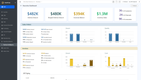
DigitBridge sits in a completely different lane than NetSuite, focusing entirely on distribution and omnichannel fulfillment. It pulls in orders from every sales channel, auto-syncs catalogs, and routes orders to the right warehouses. It’s adept at maintaining accurate stock levels without requiring multiple connectors.
Whether you sell to B2B, B2C, wholesale, or national retailers, every order is processed through a single fulfillment screen. Unlike NetSuite, DigitBridge doesn’t require paying for WMS add-ons or configuring half a dozen modules. The warehouse tools are innate and intuitive, featuring multi-warehouse support, pick/pack/ship workflows, custom packing lists, and barcode scanning. Accounting is handled cleanly via QuickBooks Online, which many small distributors prefer.
Pricing is also refreshingly simple. There are four tiers, with the Growth plan starting at $299/month. DigitBridge charges a small percentage of digital-channel sales, and that percentage drops as you move up plans. Because DigitBridge doesn’t charge per user, warehouse teams aren’t stuck behind NetSuite’s licensing wall.

See our full DigitBridge review for more details.
Odoo - Best Retail Platform
Odoo resolves a common frustration for retailers by putting everything in one engine. Point-of-sale, eCommerce, inventory, and CRM all communicate with one another seamlessly, eliminating the need for custom integrations or multiple vendors.
Its POS module works online or offline and auto-syncs once you’re reconnected. Inventory adjusts instantly across all channels, and returns flow back into the same system. The experience is smoother than NetSuite for many small retailers because Odoo doesn’t force you into add-ons or rigid module paths.
However, Odoo is not plug-and-play; it’s a full ERP under the hood, and retailers with thousands of SKUs and multiple locations usually need an Odoo partner to structure their catalog and setup correctly. When appropriately configured, it becomes one of the more affordable NetSuite alternatives out there.
Most retailers land on the Enterprise plan at $39/user/month. A 10-user shop may spend around $5,000 per year versus over $30,000 for NetSuite, once you factor in base fees and licenses. Implementation still requires investment, usually $20,000 to $100,000, depending on scope. Still, the total cost lands dramatically lower than NetSuite.
Learn more on our NetSuite vs. Odoo comparison page.
Systems We Also Like
SAP Business One is a strong NetSuite alternative for small businesses with between 10 and 100 employees. Like NetSuite, SAP Business One is highly customizable thanks to a variety of add-ons. The basic system includes accounting, CRM, and human resource applications. Accessing real-time data and generating reports is easy since SAP is deployed on-premise and in the cloud.
What is NetSuite?
NetSuite ERP cloud-based software is one of the most deployed enterprise resource planning (ERP) solutions in the world. It’s popular because, as an ERP solution, it helps companies collect and utilize business data through automated applications like accounting, procurement, and supply chain management. NetSuite software helps companies around the globe increase productivity, reduce errors, and influence business decision-making with real-time data visibility.
A few of the most well-known features include:
- Full ERP suite with business intelligence tools
- Cloud-based deployment
- B2B and B2C eCommerce capabilities
- Custom configurations through modules and third-party-developed add-ons
Why Choose an Alternative to NetSuite?
NetSuite is a popular solution for medium-sized companies with 50-500 employees. A Software Connect evaluation found almost a quarter of users were working in professional services. The distribution and manufacturing industries make up another quarter. More than 40,000 organizations have used NetSuite in over 160 countries.
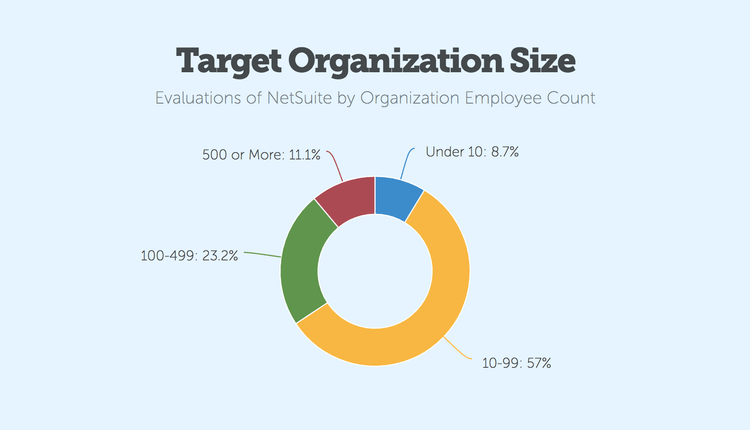 More than half of NetSuite users reported having between 10 and 99 employees to Software Connect.
However, there are many reasons this software might not be right for your business. Some reasons users have decided to find an alternative to NetSuite include:
- Too expensive to implement and high annual subscription fees
- Doesn’t have the right applications for large enterprises
- Too much functionality for smaller businesses
- Mobile setup is not user-friendly
- Limited customer support
Another big reason users have turned away from NetSuite? They don’t offer their ERP software to small businesses. Whether your company has been deemed too small or you want to switch your users to a better suited software system, start your free search with Software Connect.