

The Best Enterprise Accounting Software
Enterprise accounting and finance software can help manage transactions, generate reports, and maintain accurate financial records. We tested the best systems for large companies that support numerous users, departments, and locations.

- Advanced cross-platform analytics
- Integrates with Microsoft products
- Extensive customization options
- Automated and controlled financial planning and reporting
- Flexible scalability
- No expensive hardware required for deployment
- Brainstorms from community suggestions
- Configuration flexibility
- Powerful frameworks
Once your business spans multiple entities or outgrows what QuickBooks can handle, you need accounting built for scale. We tested hundreds of accounting, ERP, and finance software using our independent review process, and these are our 7 picks for enterprise accounting software.
- Dynamics 365 Finance: Best Financial Reporting
- Oracle Fusion Cloud: Best Global Support
- Workday: Best Budgeting and Forecasting
- SAP S/4HANA: Best Advanced Billing
- Intuit Enterprise Suite: Best for Leaving QuickBooks
- Acumatica: Best for Distribution
- Multiview: Best for Healthcare
Dynamics 365 Finance - Best Financial Reporting
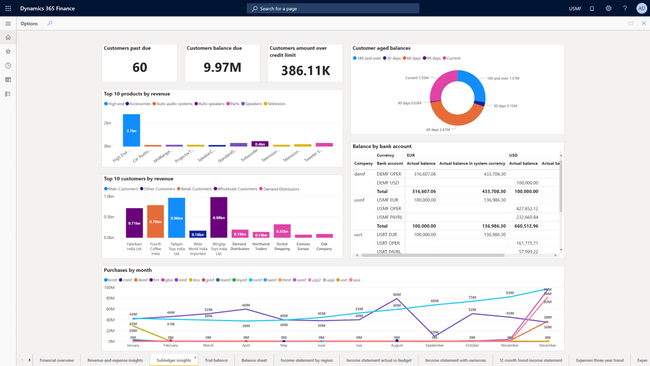
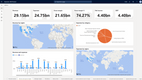
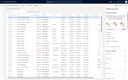
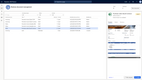
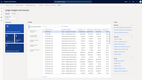
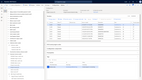
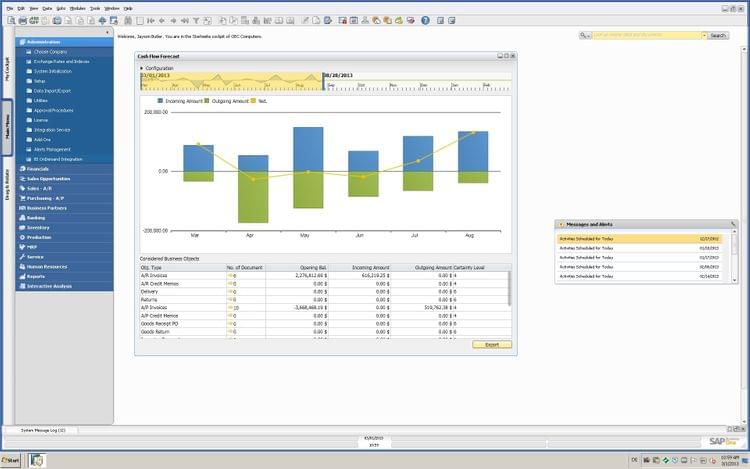
Dynamics 365 Finance offers a reporting feature that can provide detailed insights into your financial health. The functionality pulls real-time data directly from the software’s general ledger and other integrated modules, such as accounts payable, accounts receivable, and project management.
For instance, you’re a global retail company with operations in the U.S., Europe, and China. It can be challenging to consolidate financial reports for your quarterly board meetings, especially when each subsidiary operates in a different currency and adheres to specific local tax regulations.
Using Dynamics 365 Finance, all data from each subsidiary will flow automatically into a centralized database. The system will update the exchange rates in real-time, ensuring accurate currency conversions. You can set up a consolidated financial statement that combines revenue, expenses, and profit margins across all locations.
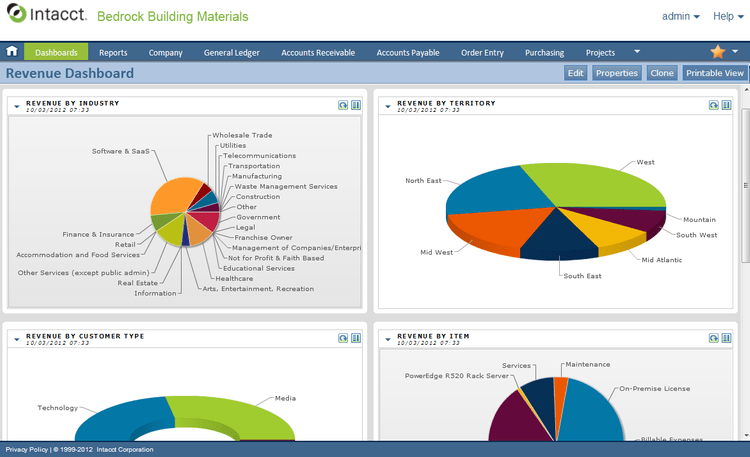
Power BI dashboards can present insights into regional sales performance, operating costs, and year-over-year growth trends. Dynamics 365 Finance also automatically generates compliance reports tailored to specific jurisdictions, ensuring adherence to local financial regulations and tax requirements.
Dynamics 365 Finance starts at $210/user/month, making it one of our most affordable picks. It best suits businesses with complex financial processes looking for in-depth reporting and analytics.
Oracle Fusion Cloud - Best Global Support
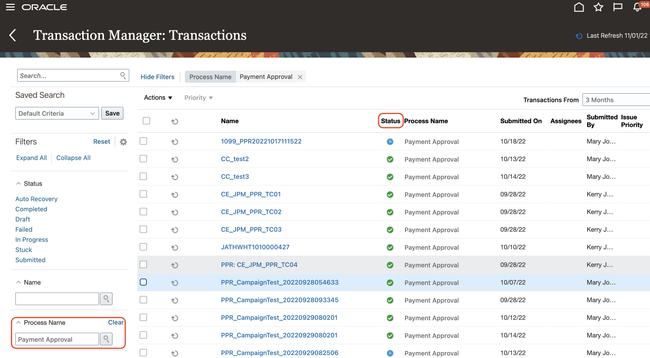
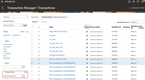
Oracle Fusion Cloud’s multi-currency and multi-language support enables you to conduct transactions internationally with accurate financials across regions without manual calculations.
The system uses AI and machine learning capabilities to continuously update global tax rules, regulatory requirements, and accounting standards. For example, if you operate in 10 countries, you’ll need a system to consolidate financial data while adhering to local laws, such as Germany’s VAT laws or Japan’s consumption tax. Oracle Fusion Cloud automatically applies Germany’s VAT rates and can adjust Japan’s consumption tax during transactions. The database’s real-time updates ensure that tax calculations are accurate and reflect current laws.
The system can convert all transactions, such as euros, rupees, and yen, into your corporate currency using up-to-date exchange rates. The built-in audit trail tracks all financial transactions, making it easier for both internal teams and external auditors to verify compliance. Users can access the platform in their preferred language, including translated reports, menus, and notifications.
Workday - Best Budgeting and Forecasting
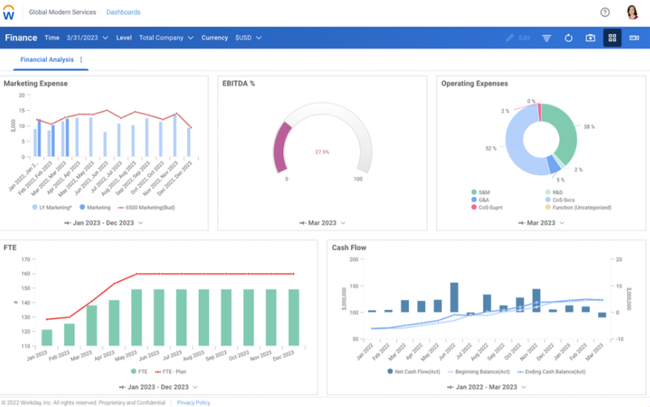
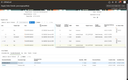
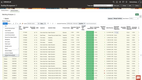
Workday ERP’s budgeting and forecasting feature can help you manage your financial goals, plan for your upcoming expenses, and adapt to changing market conditions. This functionality consolidates data from different entities and regions into one system, ensuring everyone is aligned.
Suppose you experience any economic changes throughout the year that cause supply chain disruptions. In that case, you can utilize Workday’s scenario analysis tool to model how prolonged disruptions could impact inventory costs, staffing, and revenue. Based on the software’s analysis, you can adjust your budget to allocate more funds toward supplier diversification and employee overtime pay.
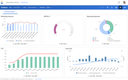
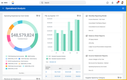
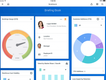
The database also offers rolling forecasting projections that update in real time as new sales data from all regions flow into the system. The predictive analytics module identifies a downward trend in any product category, enabling you to focus on boosting sales for these items. The software’s custom dashboards will portray these adjustments so you can make informed decisions quickly.
SAP S/4HANA - Best Advanced Billing
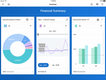
Enterprises typically deal with large volumes of transactions and customer accounts, making it difficult to track and bill clients manually. Automated billing systems, like SAP S/4HANA, can handle vast amounts of data, streamlining tax calculation, invoice generation, adjustments, and final invoice delivery, allowing you to scale without compromising accuracy.
SAP S/4HANA supports multiple billing methods, such as time-based, milestone-based, and usage-based billing, allowing you to tailor your invoicing processes based on clients’ needs. You can set up billing rules for each client, including specific fees per item and additional services like packaging or expedited shipping.
The software supports invoicing in multiple currencies, which is ideal for seamlessly managing international transactions. Once the billing is ready, SAP S/4HANA will automatically generate invoices in real-time and send them to the appropriate customer. The system can also manage recurring billing and subscriptions for long-term contracts.
Intuit Enterprise Suite - Best for Leaving QuickBooks
Intuit Enterprise Suite is Intuit’s software for scaling enterprise organizations that have outgrown QuickBooks. It’s built for finance teams that have hit the ceiling with basic accounting tools and need more room to work after adding a number of legal entities, expanding into more business lines, or are tired of reconciling books by hand.
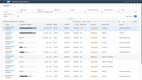
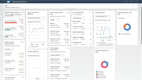
Intuit Enterprise Suite retains the same QuickBooks polish and user experience while expanding its feature set for larger companies. From a single login, finance teams can manage multiple entities and run dimensional reports from a consolidated P/L. Accountants can drill down into each book, run intercompany eliminations, or run custom reports for customers, projects, or even departments. IES also has partnerships with OpenAI and has built AI agents that can automatically flag variances, standardize the chart of accounts, and answer any questions about the month-end close.
That said, Intuit Enterprise Suite is not for everyone. Compared with many of the picks on this list, IES is very operationally limited. It has weak inventory support, its accounts payable modules are limited when compared to dedicated systems, and its price range is much higher than what existing QuickBooks users expect. For a multi-entity enterprise looking to switch to IES, expect costs ranging from $15,000 to $40,000 a year. But for large companies looking to remain with Intuit that don’t need the complexity of an Oracle or SAP rollout, IES is a solid option to consider.
Acumatica - Best for Distribution
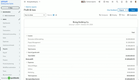
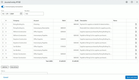
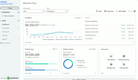
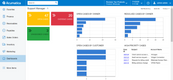
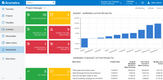
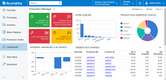
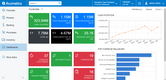
Acumatica is an ERP and enterprise accounting software, an industry edition built specifically for distributors, industrial suppliers, and wholesalers. For enterprises, it bundles operations and finance by offering a single platform for multi-entity support, global financial consolidation, and a unique pricing model that keeps costs low.
The Distribution Edition manages inventory across multiple warehouses in real time, with lot and serial tracking, automated inventory replenishment, and integrated purchasing and order management. Because fulfillment and accounting run on the same platform, your team isn’t reconciling a separate warehouse system against the general ledger at the end of each day.
The consumption-based pricing model is another reason Acumatica is a great fit for enterprise teams. Rather than pricing the system by user count, it charges based on the resource and transaction volume used across every employee. You get access to unlimited users, allowing growing finance teams to add controllers, accounts payable, and even local branch accountants to the system at no extra cost. The one thing to watch is that a high-transaction business can move up tiers as volume grows, so it’s worth mapping your order and invoice volume while comparing options.
It’s also important to note that distribution is only one of Acumatica’s industry editions. It also offers dedicated editions for construction, manufacturing, retail, and ecommerce, each with unique workflows and reporting dedicated to that line of work. For a company running more than one type of business, or growing into new ones, the accounting core stays regardless of how the business changes around it.


Multiview - Best for Healthcare
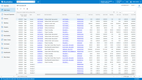
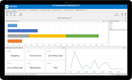
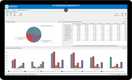
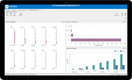
Multiview is best for large organizations in healthcare, higher education, and nonprofits. Its accounts payable module allows for multi-entity management and self-balancing intercompany transactions. This functionality helps generate up-to-date financial records across different business units or subsidiaries.
On the receivables side, Multiview ERP provides tools for managing cash receipts, customer credit, and collection issues, all within an integrated reporting framework. The general ledger module further supports this with a full audit trail, electronic workflow approvals, and document management tools. Multiview’s ability to handle miscellaneous and invoice-collected payments makes it a solid pick for enterprises improving their financial operations.
Systems We Don’t Like
Despite the name, QuickBooks Desktop Enterprise isn’t the best solution for enterprises due to its scalability and lack of customizations. The system can only handle up to 40 users and has transaction and data limits.
What Is Enterprise Accounting Software?
Enterprise accounting software handles the financial complexity that standard small business tools can’t. It offers support for multiple legal entities, consolidated reporting, multi-currency transactions, and role-based access for larger teams. These platforms go beyond broad accounting software and centralize the general ledger, provide accounts payable and receivable automations, and offer dimensional reporting and intercompany eliminations.
“Enterprise” here doesn’t mean you have 10,000 employees and require a full SAP rollout, as most companies looking for enterprise accounting software fall in the 50 to 1,000-employee range, run several entities, and have simply outgrown what QuickBooks or Xero can provide.
Often, enterprise accounting software overlaps with enterprise resource planning (ERP software) as both options automate core financial work for large businesses. ERP software goes beyond just accounting and includes operational tools for inventory control, supply chain management, and material resource planning.
Key Features
- General Ledger: A central repository for accounting data transferred from all sub-ledgers. Helps prepare financial statements that showcase company assets, liabilities, equity, revenue, and expenses.
- Accounts Payable: Manages money your company owes to others. Includes check-writing capabilities, vendor management, 1099 processing, and purchase order reconciliation.
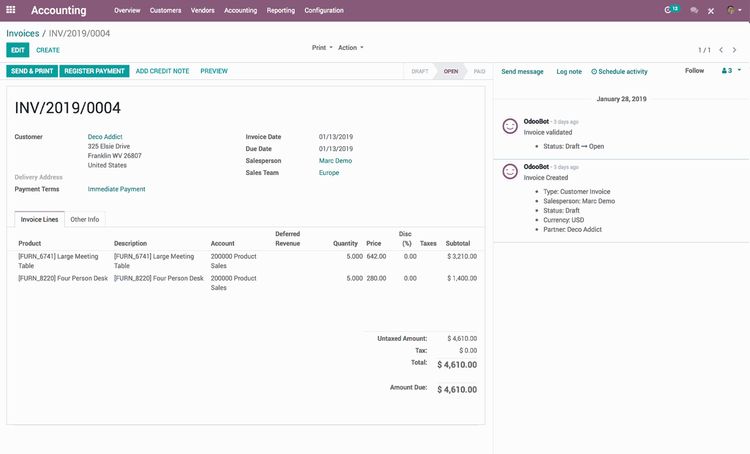
- Accounts Receivable: Manages money owed to the organization, such as debts and unpaid invoices. Includes a customer database, invoice creation, and recurring billing.
- Fixed Asset Management: Provides automation for depreciating asset value for optimal asset management strategies and accurate business tax filing.
- Bank Reconciliation: Imports bank records, often in real-time, and attempts to auto-match bank and accounting records.
- Multi-Entity Consolidation: Combines the books of multiple legal entities into one set of financials. Automates intercompany transactions and eliminations so you’re not rebuilding consolidated reports in spreadsheets.
- Billing/Invoicing: Create, send, and manage outbound invoices for client work. Collect payments online via credit card payments or ACH bank transfers.
- Revenue Recognition: Automates how and when revenue is recorded to stay compliant with ASC 606. Most useful for enterprise subscription, SaaS, and contract-based businesses with deferred or multi-period revenue.
- Purchase Orders: Creates financial documents issued to vendors when buying supplies or services. It can be included within accounts payable or as a standalone module depending on additional features needed, such as automatic generation based on inventory levels or approval and requisition workflows.
- Payroll: Executes employee compensation via wage calculation, check printing and direct deposit, and payroll tax management. Includes deductions management, benefits administration, and time tracking.
- Role-Based Permissions and Audit Trails: Controls who can view and change each part of the system, and logs every change. Supports segregation of duties and audit requirements that basic accounting tools don’t handle.
- Dimensional Reporting: Create reports and splice financial data by entity, department, location, project, or customer. Powers dashboards, budgeting, forecasting, and budget-versus-actual comparisons.
Primary Benefits
Despite the name, enterprise accounting software is not exclusively for larger businesses. Many small and midsize companies looking for enterprise-level features can benefit from an enterprise accounting system. Some of the top benefits of enterprise accounting programs include:
Improved Focus on Your Departments, Divisions, and Entities
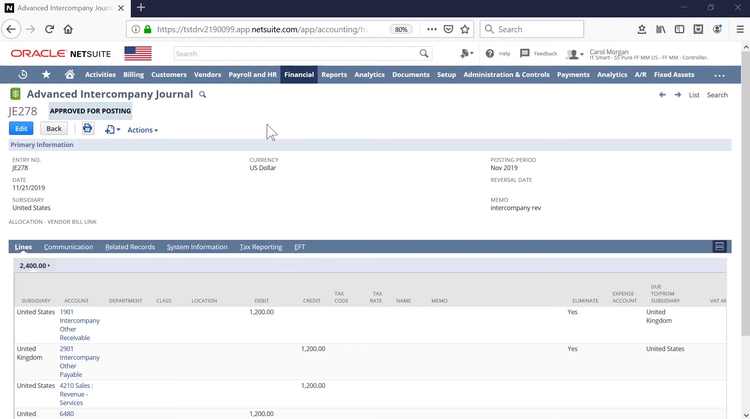
A general rule of thumb is that the more advanced an accounting system is, the more easily it can handle multiple subsidiaries within your organization. Your business may operate different departments or divisions under different names, and without the proper accounting system, keeping financials separate can be messy. Limiting user access so that only members of specific divisions can edit fields related to their divisions can also cause headaches.
A more robust accounting system will help you support multiple divisions within the same company. Any transaction between related companies (intercompany transactions) can easily be handled, and users can only access files necessary to them.
Easily Add Modules at Your Convenience
Enterprise accounting software usually has a modular design, meaning the software can be bought in bits and pieces. For example, if you only required AP, AR, and a GL to begin, you could purchase the software at an appropriate price. Down the road, you can add on the advanced invoicing or budgeting/forecasting tool and pay the difference in cost.
This level of flexibility means enterprise accounting software can offer broad capabilities without forcing you to begin using (or, worse, pay for) features you have no interest in. Likewise, you can continue to use existing systems side-by-side with your newer enterprise option if your staff is reluctant to give up a solution it likes.
For example, many companies use a separate solution for Customer relationship management (CRM). While your new enterprise accounting system may have its own CRM module, if it doesn’t force you to use or purchase it, the transition to the new software might go over better with your staff.
Gain Insight on Your Business Performance With Advanced Reports
Prebuilt reports, dashboards, data visualizations, and more can all be created with the advanced reporting capabilities of most enterprise accounting software. These reports can be used for both internal uses or for any regulatory compliance required by your organization. These reports aim to help interpret the results of your company’s financial performance and anticipate future performance and gains.
Pricing Guide
Enterprise accounting software covers a wide price range from as low as $15,000/year for basic roll-outs to over $500,000/year for global operations. Where you land depends on your financial complexity, the number of users your business needs, and whether your accounting software also covers operations. Below is a breakdown of what to expect for pricing:
-
Small Enterprises ($15,000 to $25,000/year): The starting point for companies that have grown past QuickBooks or Xero and have only a handful of entities. Often, this tier covers 20 to 50 employees, and you can expect features for multi-company consolidation and reporting without a heavy implementation.
-
Growing Enterprises ($30,000 to $100,000/year): Where most growing finance teams land. This tier covers organizations with 100 to 300 employees that need operational, multi-entity consolidations, and heavy automation across larger finance teams. Often includes integration with existing business systems or custom applications to support unique workflows.
-
Global Enterprises ($150,000 to $500,000+/year: True tier-one ERP systems like Oracle Fusion Cloud and SAP S/4HANA live here. These are built for large, global organizations that need deep customizations, large user counts, and go through a formal IT and procurement process. Often, deployments exceed millions of dollars for large rollouts.
Beyond the License Fee
Beyond the core license costs for modules and the required number of users, enterprise accounting software often incurs separate implementation and training fees. Small enterprises should expect to spend about 1 to 2 times their license cost on implementation, while global enterprises should budget for 3 to 4 times their first year license cost for training, customization, and setup. Budget for implementation as a variable cost based on the complexity of your workflows rather than as an afterthought.
Frequently Asked Questions
What accounting software do big corporations use?
Big corporations rarely run standalone accounting tools. They run finance inside a larger ERP, so the general ledger connects to procurement, inventory, and reporting under one system. You can explore our full list of companies that use ERP software, but the platforms that come up most often are:
- SAP Cloud ERP (S/4HANA) and Oracle (Fusion Cloud) for the largest most global operations.
- Microsoft Dynamics 365 Finance for finance teams already in the Microsoft ecosystem.
- Workday Financial Management for budget-heavy finance teams that need strict segregation-of-duty requirements.
Each of these systems handles multi-entity structures, multi-currency, intercompany eliminations, and audit-ready close at a scale small-business tools can’t reach. Many corporations also add specialized software, like a dedicated EPM or automated accounts payable platform.
Will QuickBooks Work For Enterprise Accounting?
For most enterprises, no.
QuickBooks Online Advanced caps at 25 users and one company file, and QuickBooks Enterprise only handles multi-entity consolidation through clunky Excel workarounds. Intuit’s real enterprise product is Intuit Enterprise Suite, which adds native multi-entity accounting and consolidated reporting, though it’s US-only with no multi-currency.
For global, multi-currency, or heavily governed finance, you’re better off with ERP-embedded accounting like NetSuite.
How do I know when I've outgrown QuickBooks?
A few clear signs mean you’ve pushed past what QuickBooks was built for:
- You’re running more than one legal entity and consolidating them by hand in Excel.
- You’re bumping into user or data limit caps.
- Your month-end close drags because data lives in spreadsheets outside the books.
- An auditor, lender, or new owner wants reports that your current setup can’t produce.
Hitting one of these isn’t always a reason to switch. Hitting several usually is. The most common next steps are Intuit Enterprise Suite if you want to stay in the QuickBooks family, or go with an ERP like Acumatica if you need multi-entity consolidation, dimensional reporting, and an automated close process.
What do big companies use instead of QuickBooks?
Companies leave QuickBooks when they hit multiple entities, high transaction volume, or have consolidation and compliance requirements that QuickBooks wasn’t built for. The most common next step is Sage Intacct, which keeps an accounting-first feel while adding multi-entity consolidation, dimensional reporting, and automated month-end close.
Larger organizations jump to full ERP for finance and operations: Oracle NetSuite bundles accounting with inventory, CRM, and eCommerce in one suite, while Microsoft Dynamics 365 Finance, SAP S/4HANA Finance, and Workday Financial Management serve the biggest, most governed finance teams. Xero often gets floated as an alternative, but it targets small businesses and won’t solve enterprise consolidations.
What’s the difference between ERP and accounting software?
Accounting software handles your financials, covering essentials such as the general ledger, accounts payable and receivable, reconciliation, and reporting. ERP software does all of that on top of connecting the books to the rest of the business. Think of it as one system that covers tools for inventory, procurement, order management, and sometimes CRM or HR, so everything runs on a shared database.
For a growing finance team, the line between each blurs, because most of the enterprise-grade options are really ERP systems with a strong accounting core. If you want a deeper dive into the differences, check out our page comparing ERP and accounting software in depth.